
Black Friday strategy for subscription brands: how to win subscribers who stay
A subscription brand can run Black Friday and Cyber Monday with less risk to retention by keeping the offer close to its everyday discount, limiting any deeper discount to the first order, favouring prepaid plans and non-price extras, showing the post-promotion price beside the subscribe button, and tracking the Black Friday signups separately through their first three renewals.
Recharge, a subscription app that competes with Curobi, reports from brands on its own platform that brands which priced Black Friday like any other week came out level with their usual retention at month 13, while brands that discounted 10 or more points deeper than usual came out a median 2.5 points behind their own rest-of-year retention (Recharge, September 2026). Recharge presents this as an association, not a proven cause.
This guide covers BFCM (Black Friday Cyber Monday) for Shopify merchants who sell subscriptions, boxes or refills. Dates are for 2026, and every source was checked on 8 November 2026. Two companion posts go deeper: how Shopify applies a discount to the first order or every renewal, and how to sell gift subscriptions on Shopify.
Quick answer: how should a subscription brand run BFCM?
- Decide whether you need a promotion at all. Recharge reports that more than half of the established subscription brands it measured priced Black Friday like any other week.
- If you discount, put the depth on the first order and limit the code to that order in Shopify. A code left on every recurring payment keeps discounting after the sale.
- Prefer offers that leave the monthly price alone or buy a longer commitment: a bonus item, a gift subscription, a one-time holiday box, or a prepaid or annual plan.
- Look after existing subscribers first, so they don’t cancel and rejoin at the sale price.
- Disclose the whole deal beside the subscribe button: that it renews, the promotional price, the price after it, when it changes and how to cancel.
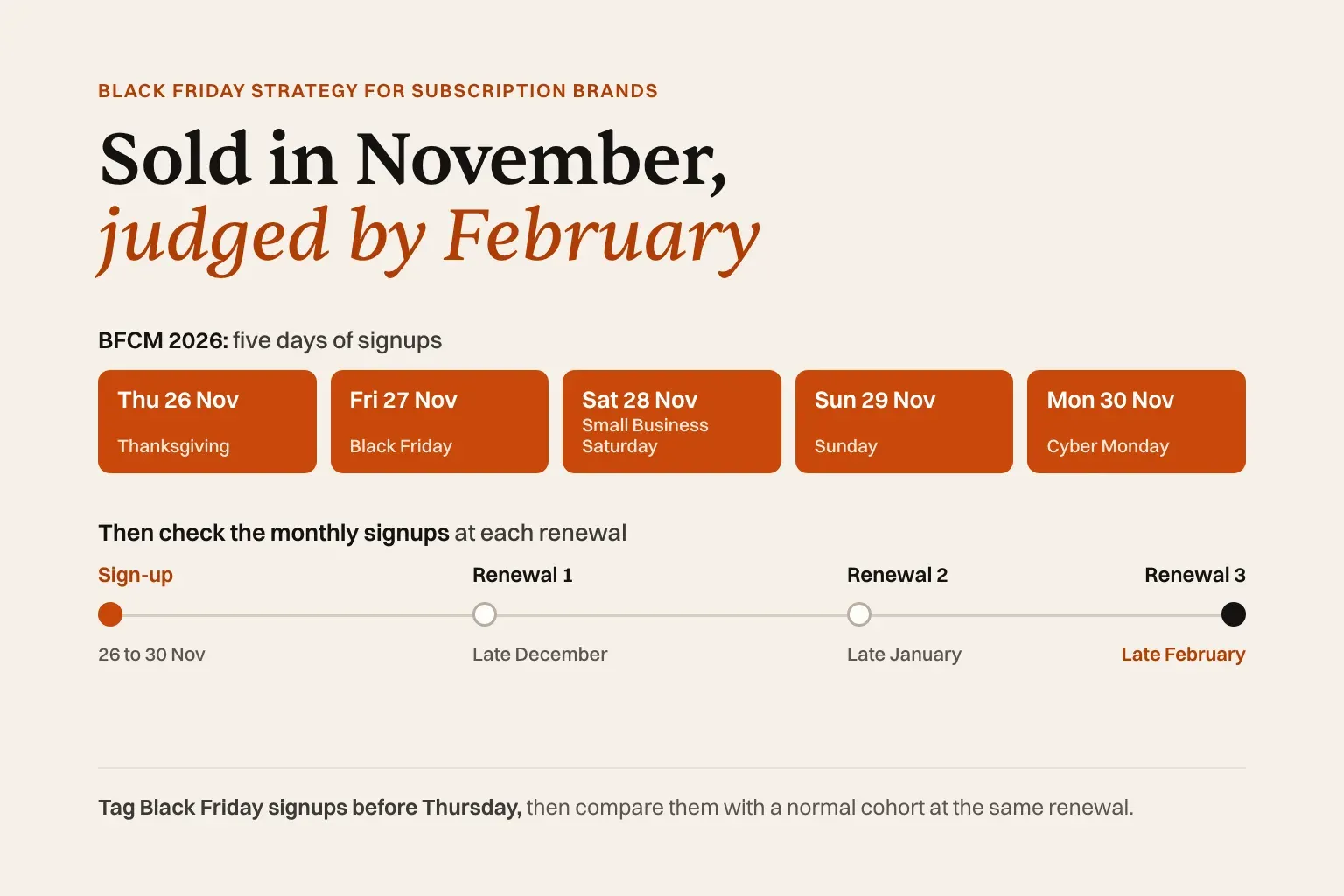
- Tag the BFCM signups and check them at renewals 1, 2 and 3. For late-November monthly signups, renewal 3 falls in late February.
BFCM 2026 dates and what to set up before Thanksgiving
BFCM, short for Black Friday Cyber Monday, is the five days from Thanksgiving to Cyber Monday: Thursday 26 November to Monday 30 November in 2026. Subscription signups don’t build up beforehand. Averaged over 2021 to 2025, Recharge reports, from brands on its own platform, that daily signups stay near a normal October day’s level until Thanksgiving, which runs at about 1.1 times a normal day, while Black Friday reaches 2.0 times and Cyber Monday 1.95 times (Recharge, September 2026). Setup has to be finished before Thursday.
| Date (2026) | What it is | What should be done by then |
|---|---|---|
| Fri 20 Nov | One week out | Offer built and tested: a test order with the code on a subscription product creates a subscription with the discount you intended. Disclosure copy is live on the product page and at checkout |
| Mon 23 Nov | Thanksgiving week | Existing subscribers know what they get. Renewals due 26 to 30 November are counted, with packing and support cover. Emails are scheduled |
| Thu 26 Nov | Thanksgiving | Offer live if it starts today. Tagging of new signups is already on |
| Fri 27 Nov | Black Friday | The busiest of the five days in Recharge’s data. Someone reviews new subscription orders for fraud |
| Sat 28 Nov | Small Business Saturday | Nothing new to set up. The offer reads the same in ads, emails, product pages and checkout |
| Mon 30 Nov | Cyber Monday | The second peak. A fixed end time, and one named person to switch the offer off |
| Tue 1 Dec | The day after | Codes deactivated and any raised plan discount put back (sale signups keep their terms). The cohort is tagged or exported |
What the data says about Black Friday subscribers
Shopify reports that its merchants worldwide made about $14.6 billion in online and offline sales over BFCM 2025, a figure it describes as approximate (Shopify). The release doesn’t break out subscriptions. The most detailed published subscription data we found comes from Recharge, and it covers subscription brands on Recharge’s own platform, selling on Shopify. Read its figures as evidence about those brands, not as benchmarks for your store.
BFCM’s share of the year’s subscription signups
Recharge reports, from brands on its own platform, that BFCM brought 2.38% of the year’s new subscriptions in 2025: 1,767,388 out of 74,269,629. The five days are 1.4% of the calendar, which Recharge says makes the week about 1.7 times as valuable as a random week (Recharge, September 2026). Recharge adds that late January usually beats BFCM on raw signup volume.
Deeper-than-usual discounts track with weaker retention
Recharge compared 3,232 brands’ Black Friday discounts in November 2022, 2023 and 2024 with each brand’s own rest-of-year rate (Recharge, September 2026). A brand measured in more than one year counts once for each, so the shares below are of 5,715 brand-year measurements:
- 53.3% ran no real promotion, staying within 3 points of their usual discount. 23.4% ran a deep one, 10 or more points deeper.
- The deep promoters kept a median 18.5% of their Black Friday subscribers at month 13, against 21.8% of their rest-of-year subscribers. Compared brand by brand, the gap was 2.5 points, and 66.5% of these brands came out worse.
- Brands that didn’t discount deeper came out level with their usual retention, in Recharge’s summary: their median gaps were 0.4 points or less.
Recharge calls the link between deep discounting and weaker retention “a consistent association across five years, not a proven cause.”
Black Friday buyers choose longer plans, and longer plans last
Recharge reports, from brands on its own platform, that 71.4% of BFCM subscription signups were monthly, 21.4% quarterly and 7.2% annual, against 83.0%, 13.9% and 3.1% at New Year. At the 2,037 brands that sell an annual plan, annual subscribers from Black Friday were 48.0% active at month 13 against 15.7% for monthly subscribers, roughly three times as many (Recharge, September 2026). Recharge notes that people who choose an annual plan are already higher-intent buyers, so it calls this a strong association rather than proof that moving someone onto an annual plan creates the loyalty.
Near-free first orders renew least, and early renewals decide
Recharge reports, from about 29.8 million subscriptions on its own platform first paid between July and December 2025, that 65.0% of subscribers with no first-order discount reached their first renewal, against 53.4% of those whose first order was 90% off or more (Recharge, July 2026). That study isn’t BFCM-specific, but a near-free first box is a common Black Friday offer. Recharge also reports that about 61% of voluntary cancellations happen at the first two renewals (Recharge, July 2026), which for a Black Friday monthly subscriber means late December and late January.
Klaviyo brands with the smallest BFCM discounts grew fastest
Across a stable group of 10,000 brands on its platform, Klaviyo reported that the brands offering the smallest BFCM 2025 discounts saw the highest growth, at 14% year on year, while discounts overall fell 10% and consumer spending rose 11% (Klaviyo, December 2025). It is an association in Klaviyo’s own data across all kinds of brands, not only subscription brands, so treat it as a signal.
What academic research adds
None of these studies looked at subscription boxes or refills, so none is a benchmark for a box or replenishment merchant.
- Lewis (2006), using customer data from a newspaper and an online grocer, found that “a 35% acquisition discount results in customers with about one-half the long-term value of non-promotionally acquired customers” (abstract via the IAOR index; DOI 10.1509/jmkr.43.2.195).
- Datta, Foubert and van Heerde (2015), studying a digital TV service, found free-trial customers’ average lifetime value was 59% lower than regular customers’ (Tilburg University record).
- Anderson and Simester (2004), in field experiments with a direct-mail catalogue of durable goods, found the counterpoint: deeper discounts increased later purchases by first-time customers but reduced them for established customers (Kellogg summary).
Our reading: in the newspaper, grocery and TV settings, deeper acquisition discounts went with less valuable customers, while in the catalogue experiments they brought first-time buyers back more often. The catalogue study’s harm fell on established customers, which matters when you decide what existing subscribers get.
Black Friday offers for subscriptions, compared
In Recharge’s data, brands that kept their usual Black Friday pricing came out level on retention, annual subscribers stayed far longer than monthly ones, and deeper discounts, near-free first orders most of all, went with weaker retention. Offers that leave the price alone, such as a bonus item or a one-time box, have no published retention data, but they don’t change what subscribers pay at renewal.
| Offer | What the shopper gets | Retention risk, per the evidence | What to check in Shopify or your app | Best for |
|---|---|---|---|---|
| Deeper first-order discount | One cheaper first order, then the usual price | Highest. Deeper first-order discounts track with lower first renewals in Recharge’s data | The code covers subscription purchases and its Recurring payments for subscriptions setting stops after the first payment | Brands whose second box sells itself |
| Step-down (introductory) rate for a set number of orders | A lower rate for the first few orders, then a smaller ongoing discount | Untested for BFCM in published data. The step-up lands in the early renewals, where most cancellations happen | A selling plan with two pricing policies, an app that applies the later rate, and both prices shown at signup | Products that take two or three deliveries to become a habit |
| Free shipping | Free shipping on the first order, a set number of orders or every order | Untested in published data. Set to all recurring payments, it becomes an ongoing shipping cost on every contract it touches | A free shipping code with Purchase type set to Subscription or Both, and its Recurring payments for subscriptions setting, which Shopify’s help center documents step by step for free shipping | Brands whose shipping cost is the main objection at checkout |
| Prepaid or annual plan | Several deliveries paid up front at a better rate | Lowest of the discount offers in Recharge’s data: annual plans 48.0% vs monthly 15.7% at month 13, though buyers self-select and many annual plans ship only once or a few times a year | What happens when the term ends, renewal reminders, and stock for every delivery | Steady-use consumables such as coffee, pet food and supplements |
| Gift subscription | A subscription bought for someone else | A different shape: the buyer isn’t the person who renews. Little published data | Who pays after the first order, how the gift ends, and when the first box ships | Giftable products, with sales running into December |
| Bonus item, no price cut | Something extra with the first order | Low by design, because the recurring price doesn’t change | In Shopify’s Buy X get Y, the free “get Y” item must be a one-time purchase, so it ships once | Brands protecting their price |
| One-time holiday box | A single box, no commitment | No renewal at risk. How many buyers later subscribe is the open question | A product sold without a selling plan, and a follow-up offer to subscribe | Box brands, and gift buyers who won’t commit |
| Keep your normal price | The usual subscribe-and-save rate | Lowest. Brands that didn’t discount deeper came out level | Nothing to configure. Make the everyday saving easy to see | Brands with steady demand and no margin to spare |
How to choose an offer
Keep your normal price when your subscribe-and-save discount is already the reason people subscribe and your margin has no room. You can still take part without a price cut. Shopify’s BFCM checklist quotes Bili Boboe-Balogun, founder of Tribe Beauty Box: “Rather than discounting the product, what we like to do is create mystery boxes, which we offer as a gift to customers when subscribing” (Shopify, updated 23 October 2026).
Choose a prepaid or annual offer when the product is used at a steady rate and you can fund several deliveries of stock. The discount buys a commitment rather than one order, which is where Recharge’s largest retention difference sits. A prepaid subscription also suits gift buyers.
Choose a first-order discount when you know your second box converts. Keep it close to your usual rate, limit it to the first payment, and stay away from near-free. The break-even arithmetic for price changes, worked through in how to raise subscription prices without losing subscribers, is the same calculation you need for a discount, run the other way.
Choose a step-down rate when the product needs two or three deliveries to become a habit. It puts a price rise in front of every new subscriber in the renewals where cancellations already cluster, and California requires a reminder before a promotional price that lasted more than 31 days ends. Shopify’s mechanics for an introductory offer, including who applies the later rate, are in the guide to first-order and renewal discounts.
Choose a gift subscription or a one-time holiday box when the product is giftable. Judge these on December sales and on how many recipients or box buyers later subscribe, not on month-13 retention.
Discount codes on subscriptions: the renewal trap
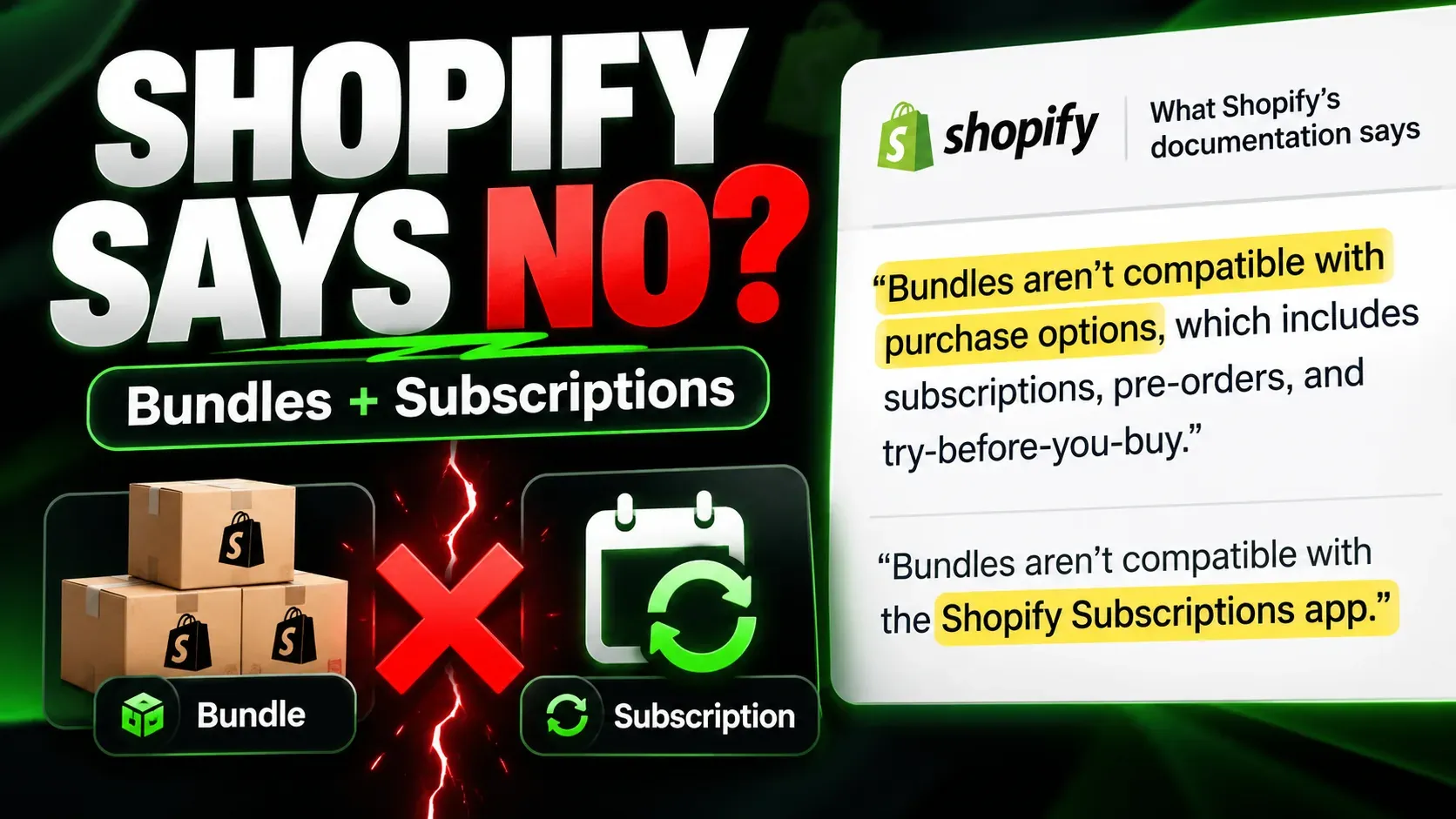
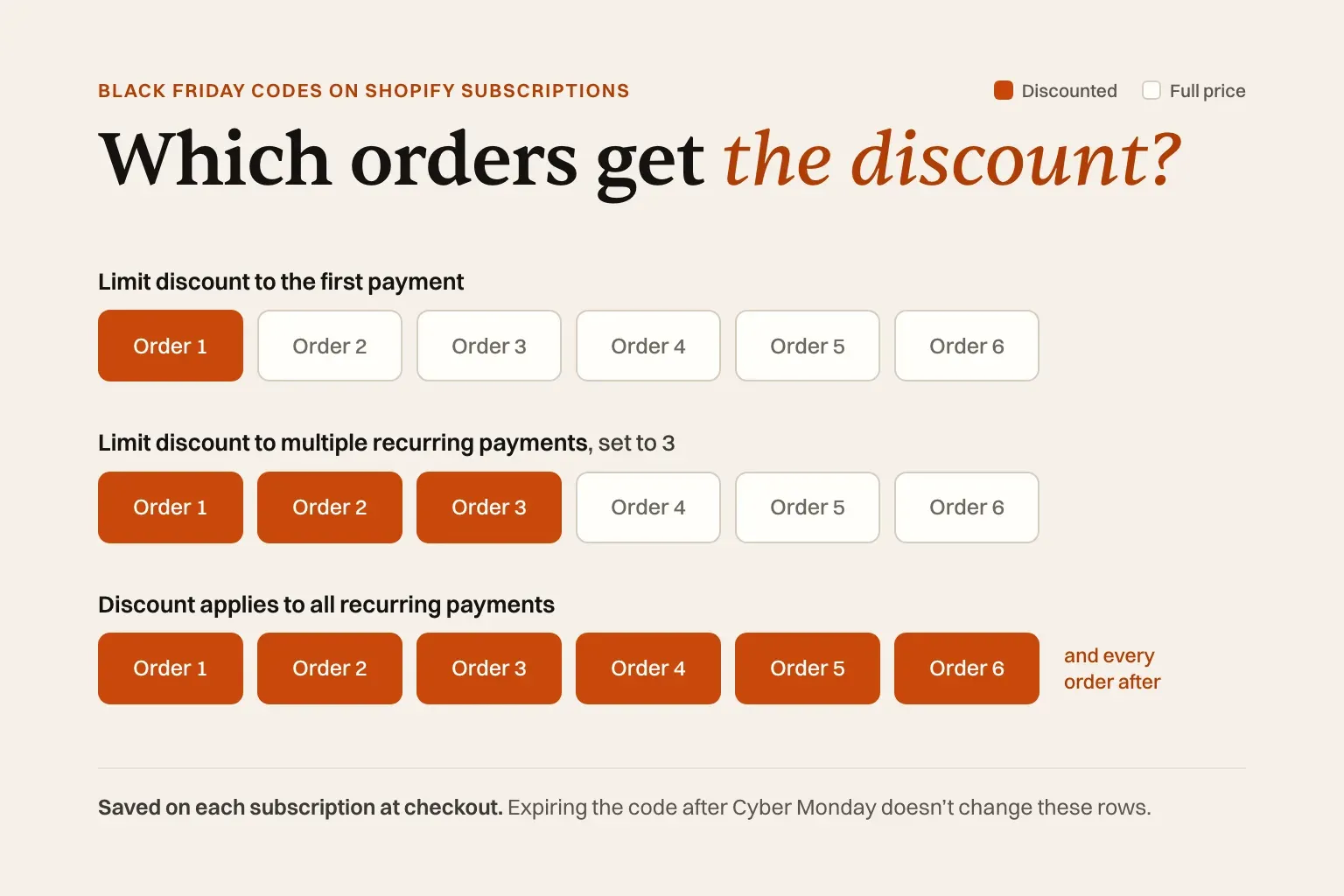
A Black Friday code applied to a subscription can outlive Black Friday. Shopify’s Help Center says that “a snapshot of the discount is saved to the subscription contract,” and that “if you expire or deactivate a discount code, the discount will continue to apply on existing subscription contracts” (Shopify Help Center). Shopify’s documentation says the code’s Recurring payments for subscriptions setting decides how many billing cycles the snapshot covers, and the same page calls it the only way to automatically limit how many billing cycles a discount applies to. The Help Center walks through the setting only for free-shipping discounts, and the Admin API carries the same limit on amount-off codes (shopify.dev), so check that it appears on your code before launch. Limit it to the first payment for a one-off deal. If it applies to all recurring payments, the Black Friday price becomes that subscriber’s price for as long as they stay. Removing a discount from an existing subscription contract is done in your subscription app, Shopify says, so check whether yours can.
Raising a plan’s subscribe-and-save discount for the weekend has a different catch. Shopify’s developer documentation says contracts are detached from the original selling plan and that plan updates don’t modify existing contracts (shopify.dev), so by default sale signups keep the sale rate after you put the plan back, unless your app edits their contracts. Discounts from apps that use Shopify Functions are reused on renewals rather than recalculated, and “by default, discounts apply only to the first payment” (Shopify Help Center). Shopify’s developer references describe the default for app discounts inconsistently, so ask the app what it sets. The settings, a worked example of orders 1 to 6, step-down pricing and a pre-launch checklist are in Black Friday codes on subscriptions.
What should existing subscribers get on Black Friday?
A Black Friday offer for new customers tells existing subscribers what you will sell for. If a new customer can join at 40% off while a two-year subscriber pays the usual rate, the cheapest move for the loyal subscriber is to cancel and rejoin with the code.
- Make cancel-and-rejoin less attractive. Shopify can limit a code to one use per customer, tracked by email address or phone number (Shopify Help Center), but that doesn’t stop a subscriber who has never used it. Keeping the discount on the first order only means rejoining gains one cheaper box rather than a lower price for good. Send the code to prospects rather than publishing it to everyone.
- Give subscribers something new customers don’t get: early access, a bonus item, or a code sent only to subscribers that applies to one-time purchases. Shopify lets a code apply to one-time purchases, subscriptions or both, so a one-time-only code lets subscribers buy gifts or extra stock without changing their subscription price.
- Make a December order easy to skip or pause. Subscribers who stocked up in the sale or are travelling need a way out of one order that isn’t a cancellation. The skip button is your best retention tool makes the full case.
In Curobi, subscribers can skip their next order or pause from the customer portal on every plan, and changing the next order date comes with Starter. Curobi can’t add a one-time item to a subscriber’s next order, and it can’t add a discount to an existing subscription or remove one, so a perk has to go out as its own order or as a code. To email only current subscribers in Klaviyo, or to leave them out of a new-customer send, segment on the Curobi Active Subscriber profile field, which Curobi keeps current on every plan.
Gift subscriptions between Black Friday and Christmas
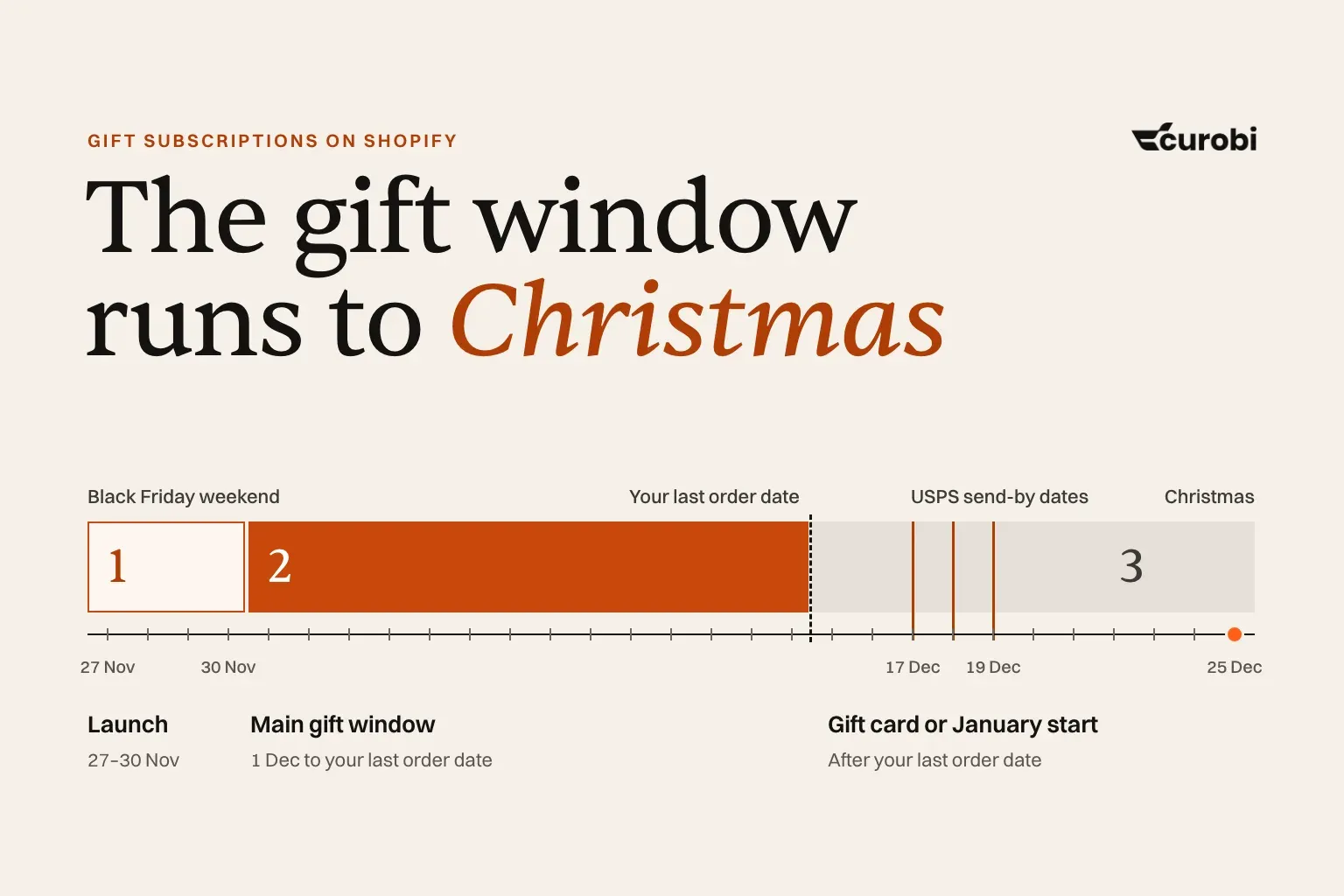
Gift subscriptions sell later than Black Friday deals. Recharge reports, from same-store consumables brands on its own platform, that its proxy for gifts, orders shipped to an address other than the one on the card, barely moved during BFCM week (10.19% of orders, against 9.75% in September) and rose to 11.61% from 1 to 24 December (Recharge, September 2026). Recharge notes the proxy also catches second homes and recent movers, so it overstates gifting. Its summary: “Gifting is real. It just happens in December.”
Treat Black Friday as the start of a gift window that runs to Christmas. Before selling a gift subscription, decide whether it covers a fixed number of deliveries or renews on the buyer’s card, what happens when it ends, when the first box ships, and what the buyer is told before paying. Shopify adds a constraint: “Gift cards that are used to pay for subscriptions apply only to the first payment” (Shopify Help Center). The five gift formats, the first-box timing problem and converting recipients are covered in the gift subscription guide.
What to disclose next to a promo-priced subscription
Beside the subscribe button and at checkout, a promo-priced subscription should say that it renews until cancelled, the promotional price, the price after it, when the change happens and how to cancel. ROSCA requires material terms before billing details; California, New York, New York City and Massachusetts add rules for temporary or reduced prices.
This section summarises published US rules as of 8 November 2026. It is information, not legal advice; confirm your obligations with a lawyer for the states you sell into.
Federal rules: ROSCA applies, the click-to-cancel rule doesn’t
The Restore Online Shoppers’ Confidence Act (ROSCA) covers online sales of subscriptions that renew until the customer cancels. Under 15 U.S.C. § 8403, the seller must clearly and conspicuously disclose all material terms before obtaining billing information, obtain express informed consent before charging, and provide simple mechanisms to stop recurring charges.
The FTC’s 2024 click-to-cancel rule is not in force. The Eighth Circuit vacated it on 8 July 2025 in Custom Communications, Inc. v. FTC, on procedural grounds (opinion). The FTC restored the older rule text, which covers only prenotification plans, on 12 February 2026 (Federal Register) and opened a new rulemaking in March 2026 (FTC). As of 8 November 2026, no new proposed rule has been published.
ROSCA enforcement continues. In September 2025, Amazon agreed to a $2.5 billion settlement over Prime enrolment and cancellation, made up of $1.5 billion in consumer relief and a $1 billion civil penalty (FTC); eligible customers can receive up to $200 in total (court order). The order binds only Amazon, but it shows what the FTC asks for: the price and the auto-renewal on the sign-up page, the word “renews” on sign-up pages, and a clear option to decline (order).
California: consent and reminders for promotional prices
California’s Automatic Renewal Law, as amended by AB 2863, applies to contracts entered into, amended or extended from 1 July 2025 (Bus. & Prof. Code § 17602). For a Black Friday price:
- Affirmative consent must cover the terms of an offer “made at a promotional or discounted price for a limited period of time.”
- If the promotional price applies for more than 31 days, a notice is due 3 to 21 days before it ends. One discounted monthly box probably sits under that threshold; three discounted months does not.
- A change in the fee charged needs notice 7 to 30 days ahead. Whether that covers a step-up agreed at signup isn’t settled, so one reminder that fits both windows is the cautious choice.
- An initial term of a year or longer, such as an annual plan sold on Black Friday, needs a renewal notice 15 to 45 days before it renews.
- Online signups need online cancellation, and a save offer shown during cancellation needs a “click to cancel” button beside it.
- Keep proof of consent for at least three years, or one year after the contract ends if that is longer. California also requires an annual reminder, and its wording may cover monthly plans too, so a yearly reminder to every California subscriber is the cautious reading.
Other state and city rules in force
| Jurisdiction | In force since | What it adds for a promotional price |
|---|---|---|
| New York State | 5 Nov 2025 | If the price is temporary, explain how and when it changes and the later price. Price increases need notice 5 business days to 30 days ahead |
| New York City | 1 Oct 2026 | The same temporary-price and price-increase rules for NYC consumers, with penalties from $525 |
| Massachusetts | 2 Sep 2025 | An offer at a reduced charge for a limited time counts as a trial offer: give the calendar date to cancel by and the date charges begin |
| Maryland | 1 Jun 2026 | Disclose the price after the initial term. Its reminder rule applies only to free gifts or trials over 14 days |
| Minnesota | 1 Jan 2025 | Ask permission before a save offer, once per cancellation attempt. Cancellation-reason questions are optional |
| Connecticut | 1 Jul 2026 | An annual reminder, and an online cancellation option or dedicated cancellation email |
| Colorado | 6 Aug 2025 | Online cancellation for automatic renewal contracts |
Virginia also amended its law in 2026 (Va. Code § 59.1-207.46); check its effective date before relying on it. Shopify’s own storefront guidance agrees: “If an initial price incentive is applied to a subscription, then explain the current payment and how payments will change in the future” (shopify.dev).
A disclosure checklist for a BFCM subscription offer
If you sell to customers across the US, these rules overlap, so aim for the strictest common version:
- Beside the subscribe option and at checkout: the word “renews”, the promotional price, the later price and how often it is charged, when the change happens, any minimum number of orders, and how and by when to cancel. A “Save 40%” badge alone doesn’t say what happens next, so put the later price in the plan name or the text beside it.
- The same terms everywhere, in banners, emails, product pages and checkout, in full rather than behind a link or tooltip.
- Affirmative consent, never a pre-ticked box, which the FTC’s 2021 guidance says “does not constitute affirmative consent.” Keep a record of it.
- A confirmation email with the terms and how to cancel.
- A reminder before the first full-price charge with the amount, the date and a cancel link. Sending it 10 to 21 days ahead sits inside every promotional-price and fee-change window above; that is our reading, not a legal standard.
- Online cancellation from the customer’s account, as easy as signing up, with any pause or skip offer shown beside a cancel button.
Example: Subscription, renews monthly until you cancel. $27.00 for your first box (40% off), then $45.00 every month from your second box on 27 December 2026. To avoid the $45.00 charge, cancel by 26 December 2026. You can cancel anytime from your account. We’ll email you before your first full-price box.
Running BFCM week: renewals, cutoffs, plan limits and fraud
Renewals keep billing through Black Friday. Subscribers renewing between 26 and 30 November need packing and support alongside sale orders. Count them in advance by next charge date, then staff for them or offer them a skip. If everyone bills on one fixed date, check whether it lands in BFCM week.
Shipping cutoffs decide what a late signup receives. Publish your own order cutoff for December delivery beside the carriers’ holiday deadlines, and set the billing cutoff for the December box before the sale so late signups know which box they join. For a curated box, plan December’s contents and quantities for the extra signups now. In Curobi’s curated boxes (Pro), you can curate this month and the next three, so December’s box can be set before the sale.
Check your app’s subscription limits. In Curobi, Free covers 50 active subscriptions and Starter 250. At the cap, new subscription checkouts stop; the cap doesn’t block renewals or one-time purchases. A good weekend can take a small store to its limit in a day, so check your plan on the pricing page before Thursday.
Watch first orders for fraud. A subscription bought with a stolen card costs more than one order, because the contract keeps the card for renewals. Curobi’s fraud protection, on every plan, acts once a first order exists: if you cancel it as fraud or for a declined payment, or Shopify recommends cancelling it, Curobi pauses the subscription by default so it isn’t billed again. It covers first orders only and doesn’t stop card testing at checkout.
Expect some declines on the first full-price renewals in late December and January. Recovering failed subscription payments covers which declines are worth retrying.
After Cyber Monday: how to tell if it worked
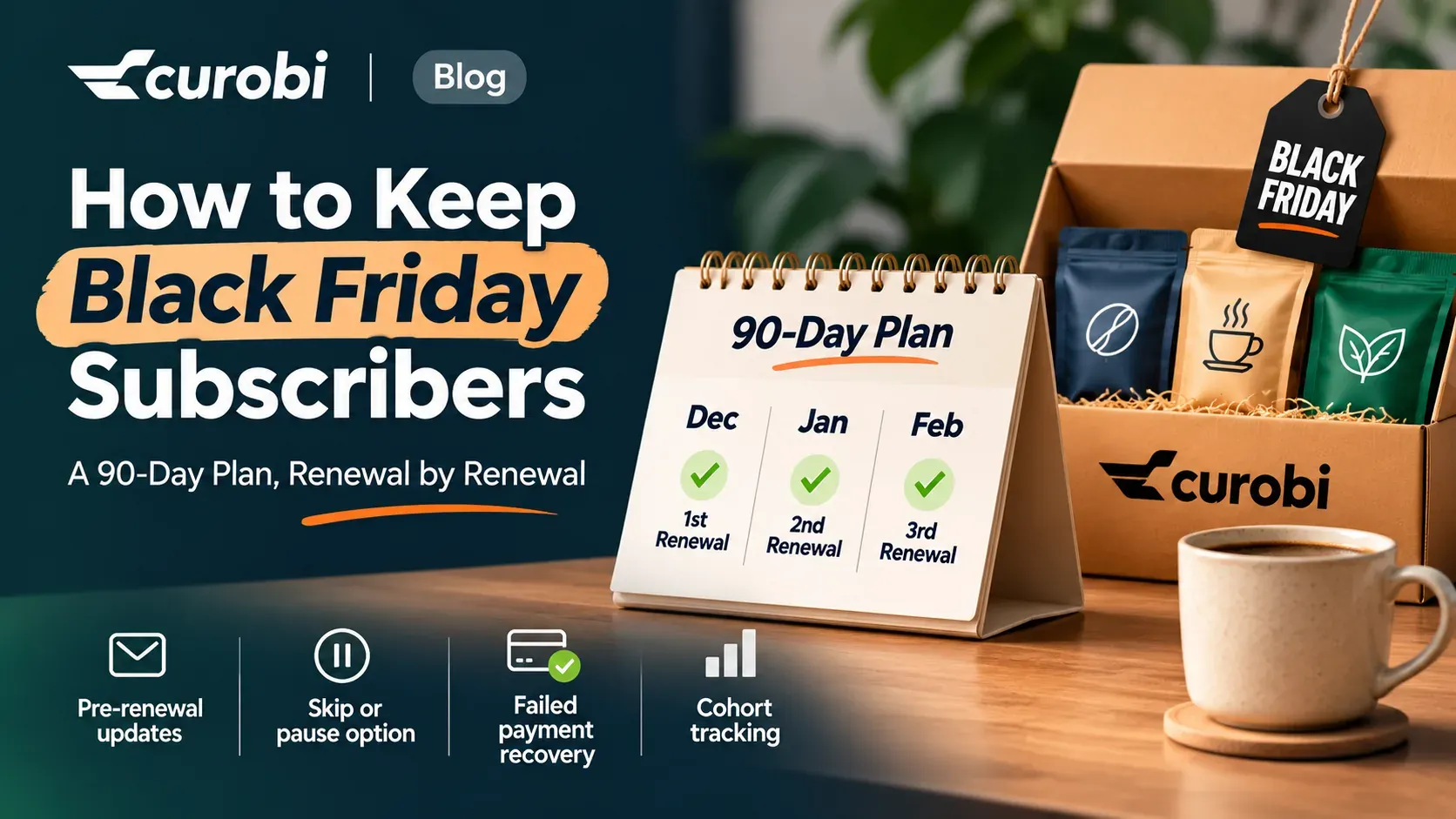
Signup numbers on 1 December say little about whether the offer worked. The answer comes over the next three renewals, and only if the Black Friday signups can be told apart. What to send those subscribers before each renewal is set out in our 90-day plan for keeping Black Friday subscribers.
Tag the BFCM signups before the sale starts
A cohort is the group of subscribers who signed up in the same period. A cohort report that groups by signup month puts Black Friday signups in the same November cohort as everyone else who joined that month. Separate them while the sale runs:
- Use a unique code per offer, so every order shows which offer the subscriber took.
- In Shopify Flow, a workflow on Flow’s Order created trigger can check the order’s discount code and tag the customer; check the exact field names in your Flow editor. With Curobi, the Subscription started trigger passes the order too, so the same check can run on subscription signups only. Curobi’s Flow triggers are on every plan. Turn the workflow on before Thursday: Curobi sends Flow events only once a workflow using its trigger is on, and earlier events aren’t replayed.
- In Klaviyo, Curobi sends a metric named Curobi Subscription Started on every plan, so you can segment people who started a subscription between 26 and 30 November (Klaviyo integration).
Curobi’s cohort analytics, on Growth, group subscribers by signup month and can’t separate the BFCM week, so its November cohort mixes BFCM and other signups. Read the Black Friday group from the Shopify customer tag or the Klaviyo segment instead.
Check the cohort at renewals 1, 2 and 3
| Checkpoint | Monthly signups from 26 to 30 November | Compare with a normal cohort |
|---|---|---|
| Renewal 1 | Late December | Share renewed, cancellations before the charge, failed payments, share paying full price |
| Renewal 2 | Late January | The same, plus skips and pauses |
| Renewal 3 | Late February | Share still active, and whether gross margin from full-price orders has covered the discount and what you spent to acquire each signup |
Compare against a normal cohort, such as October signups, at the same renewal number, and split voluntary cancellations from failed payments; Shopify subscription analytics sets out both measures. For late-November signups the third delivery lands in late January, which is where early churn tends to cluster. Judge quarterly and prepaid plans at their own first renewal. If the cohort falls behind, the fixes are in how to reduce subscription churn. Either way, the cohort’s renewal-3 numbers are a better guide to next year’s offer than Cyber Monday’s signup count.
Where Curobi fits
This section describes Curobi, the Shopify subscription app that publishes this blog. The planning advice above doesn’t depend on which subscription app you use.
- Offers (Free): Subscribe & Save plans with a percentage off, a fixed amount off, or a tiered discount (one rate for the first N cycles, a different rate after), plus prepaid plans. Changing a plan’s discount affects new signups only. Black Friday codes are Shopify discounts; Curobi can’t add a discount to existing subscriptions or remove one. Shopify notes that a subscription’s line price “does not update automatically” under a pricing policy (shopify.dev), so the subscription app, not Shopify, has to apply a tiered plan’s later rate at renewal. Ask any app how it does that, Curobi included, and check a test subscription before you advertise a tiered offer. Curobi’s subscribe option shows a tiered plan’s first discount as the saving, so put the later rate in the plan name or the text beside it.
- Gift subscriptions (Business): a shopper can buy a subscription for someone else, and the recipient gets a claim page in your store’s own theme.
- Boxes (Pro): curated boxes planned this month and the next three, Build-a-Box, and one-time box sales. A one-time box on a rolling schedule ships the current month’s box, so for a holiday box sold in late November, curate November with the holiday contents, or use a fixed calendar, where a one-time box order gets the box for the period it joins.
- Existing subscribers: skip and pause in the portal on every plan; next-order date changes and cancellation save offers (pause or skip) from Starter.
- Tracking: Shopify Flow triggers and Klaviyo metrics on every plan; cohort analytics by signup month on Growth.
- Limits and fraud: 50 active subscriptions on Free, 250 on Starter, no subscription cap from Growth; first-order fraud protection on every plan.
The plans are Free ($0), Starter ($9.99), Growth ($19.99), Business ($29.99) and Pro ($69.99), each billed every 30 days, with 0% Curobi transaction fees on every plan. Shopify’s payment processing fees still apply. See what each plan includes.
Frequently asked questions
Should a subscription brand run a Black Friday sale at all?
Not necessarily. Recharge reports, from brands on its own platform, that more than half of the established subscription brands it measured in November 2022, 2023 and 2024 (53.3% of brand-year measurements) priced Black Friday within 3 points of their usual discount, and that brands which didn’t discount deeper came out level with their usual month-13 retention. A sale makes sense when you can afford the first-order cost and have a plan to keep the cohort. A bonus item, a gift subscription or a one-time holiday box lets you take part without cutting your recurring price, and a prepaid plan trades a lower rate for a longer commitment.
Do Black Friday subscribers churn faster than other subscribers?
Not on average, in Recharge’s data: where retention slips, it tracks discount depth rather than the date. Recharge reports, from brands on its own platform, that brands which priced Black Friday like any other week came out level with their usual month-13 retention, while brands that discounted 10 or more points deeper than usual came out a median 2.5 points behind. Recharge presents this as an association, not a proven cause. Plan length showed a bigger difference: at the 2,037 brands that sell an annual plan, annual Black Friday subscribers were 48.0% active at month 13 against 15.7% for monthly subscribers.
Does a Black Friday discount code keep applying to subscription renewals on Shopify?
It can. When a code is applied to a subscription, Shopify saves a snapshot of the discount to the subscription contract, and the snapshot keeps applying even if you later expire or deactivate the code. Shopify’s documentation says the code’s Recurring payments for subscriptions setting decides how many billing cycles it covers, so limit it to the first payment for a one-off deal. Shopify says removing a discount from an existing subscription is done in your subscription app.
Should existing subscribers get the Black Friday offer?
Give them something, though not necessarily the new-customer discount. If new customers pay less than loyal subscribers, some subscribers may cancel and rejoin with the code. Keep the new-customer discount on the first order only and send the code to prospects rather than to current subscribers. Give subscribers early access, a bonus item or a code for one-time purchases, plus an easy way to skip or pause a December order.
Is the FTC’s click-to-cancel rule in effect in 2026?
No. The Eighth Circuit vacated the FTC’s 2024 click-to-cancel rule on 8 July 2025. The FTC restored the older rule text in February 2026 and opened a new rulemaking in March 2026, but no new proposed rule had been published as of 8 November 2026. ROSCA, a federal statute, still requires online subscription sellers to disclose all material terms before taking billing details, get express informed consent and provide a simple way to stop recurring charges.
What should a promotional subscription price disclose?
Beside the subscribe button and at checkout, show that the subscription renews until cancelled, the promotional price, the price that follows it, when the change happens, how often the customer is charged, any minimum commitment, and how and by when to cancel. Get affirmative consent without a pre-ticked box, send a confirmation the customer can keep, and remind customers before the first full-price charge. This summarises US federal and state rules as of November 2026.
When can I tell whether a Black Friday subscription offer worked?
After about three renewals, which for monthly subscribers who joined between 26 and 30 November means late February. Tag the Black Friday signups when they join, then compare their renewal rate, failed payments and full-price revenue at renewals 1, 2 and 3 against a normal cohort at the same renewal number. Recharge reports, from brands on its own platform, that about 61% of voluntary cancellations happen at the first two renewals, so the first two checkpoints carry most of the answer.
Sources
- Recharge (vendor data from subscription brands on its own platform): 2026 Black Friday marketing strategy for subscription brands (September 2026, updated October 2026), The first-order discount sweet spot, Subscription churn is front-loaded
- Klaviyo: BFCM 2025 press release, filed with the SEC (2 December 2025)
- Shopify: BFCM 2025 results; Black Friday checklist; Help Center on subscription discounts, Shopify Subscriptions considerations and amount off discounts; shopify.dev on selling plans, subscription contracts, DiscountCodeBasicInput and subscription UX guidelines
- Academic: Lewis (2006), Journal of Marketing Research 43(2) (abstract); Datta, Foubert and van Heerde (2015), Journal of Marketing Research 52(2) (record); Anderson and Simester (2004), Marketing Science 23(1) (summary)
- Federal: ROSCA, 15 U.S.C. § 8403; Custom Communications, Inc. v. FTC (8th Cir., 8 July 2025); FTC final rule, 12 February 2026; FTC advance notice, March 2026; FTC 2021 enforcement policy statement; Amazon Prime settlement, stipulated order and September 2026 redress order
- State and city: California § 17602; New York GBL § 527-a; New York City; Massachusetts 940 CMR 38.00; Maryland SB 49; Minnesota § 325G.58; Connecticut Attorney General; Colorado SB25-145; Virginia § 59.1-207.46
Checked on 8 November 2026. Shopify and others usually publish BFCM results in early December, and state rules keep changing, so recheck before planning BFCM 2027 from this page.