
12 best Recharge alternatives for Shopify (2027), matched to why you're leaving

There is no single best Recharge alternative; the right one depends on why you are leaving. If it is the price Recharge set for new stores on 2 November 2026, $149 a month plus 1.50% + 20¢ per transaction on its Starter plan, the apps with a flat fee and no transaction fee (Appstle, Curobi, Kaching, Seal and Supr) all cost less than Recharge Starter at the three store sizes modelled below, and Shopify’s own Subscriptions app is free. If it is that Recharge sells bundles and boxes only on its $499 Scale plan, Appstle, Curobi, Joy, Loop, Seal (with its Bundler app) and Supr all put a box on a cheaper plan. If you were planning to move to Skio, Recharge has owned it since April 2026, so that move changes the product but not the owner. If you want different retention tools or enterprise terms, compare the plan each tool sits on, because Recharge’s Starter plan already includes cancellation prevention, failed-payment recovery and win-back.
Curobi, which publishes this page, is one of the twelve alternatives compared. Every table lists Recharge first, as the baseline, and then the alternatives in alphabetical order, Curobi included, and the page says where other apps cost less than Curobi: for a box program under about $15,000 a month, Appstle, Seal with Bundler and Supr all do. Prices are monthly list prices in US dollars from each vendor’s pricing page, App Store listing or help centre, read on 13 November 2026; Recharge, Appstle, Loop, Seal, Stay AI and Supr were re-read on 15 November and Skio on 14 November. They are the prices on those dates, not a forecast for 2027, so check them again before you decide.
This page covers any Shopify store. A coffee roastery should start with Recharge alternatives for coffee roasters, which weighs the same field against rotating lots and roast dates. What Recharge itself costs at five store sizes is in how much Recharge costs, the wider field, including apps not covered here, is in the best Shopify subscription apps, and the move itself is in how to switch subscription apps without losing subscribers.
Quick answer: which Recharge alternative fits your reason for leaving?
| Why you are leaving | What Recharge charges or gates | Alternatives to price first | What to check |
|---|---|---|---|
| The price for new stores | Starter is $149 + 1.50% + 20¢ for stores installing from 2 November 2026, and the $25 plan for small stores is closed | Appstle, Curobi, Kaching, Seal and Supr (no transaction fee); Shopify Subscriptions (free) | What each plan caps: revenue, subscribers or nothing |
| Bundles or boxes | Every bundle type is on Scale, at $499 + 1.25% + 20¢ | Appstle, Curobi, Joy, Loop, Seal with Bundler, Supr | Which kind of box you run, and which plan carries it |
| You planned to move to Skio | Recharge owns Skio, and Skio’s annual price now matches Scale’s published rates | Any app not owned by Recharge | Who owns the app on the day you choose |
| Portal and retention tools | Cancellation prevention, recovery and win-back are on Starter; A/B testing and SMS are on Scale | Loop, Skio and Stay AI for A/B testing or SMS; Appstle, Curobi, Seal and Supr for save flows and retries on low-cost plans | The plan each tool sits on, and how it behaves when you test it as a customer |
| Enterprise terms | The Custom plan, by contract | Loop Enterprise, Skio Enterprise, Stay AI High Growth, Smartrr Excel | Contract term, negotiated rate, who runs the migration |
| A simple program | Starter is the cheapest plan a new store can buy | Shopify Subscriptions | No box, no cancellation flow, four analytics metrics |
Staying on Recharge can be the right answer too, for the reasons set out under when staying is the better answer.
The twelve Recharge alternatives at a glance
Monthly list prices in US dollars, read on 13 November 2026 unless another date is given. Shopify’s own payment processing fees apply on top with every app, Recharge included.
| App | Plans and price | Transaction fee | Boxes and bundles, and the plan | Help moving off Recharge that the vendor lists |
|---|---|---|---|---|
| Recharge (the baseline) | Starter $149; Scale $499; Custom by contract; a 60-day trial and no free plan | Starter 1.50% + 20¢, Scale 1.25% + 20¢, on the total processed, including shipping, taxes, refunded and one-time orders | Every bundle type on Scale; product journeys on every plan | A help-centre checklist and data exports for leaving |
| Appstle | Free up to $500 a month of subscription revenue; $10 (to $5,000); $30 (to $15,000); $100 (to $100,000) | None | Build-a-box from the $30 plan; product swaps on the $100 plan | “Hands-on Migration”, listed on the Free plan (15 Nov) |
| Bold | Launch $24.99; Grow $49.99; Scale $74.99 | 2%, 1% or 0.9%, on the whole order when it contains a subscription item | Build-a-box through the separate Easy Bundles app | Not stated on the pages read |
| Curobi | Free up to 50 active subscriptions; Starter $9.99 (to 250); Growth $19.99; Business $29.99; Pro $69.99; each per 30 days | None (0% Curobi fees) | Curated boxes and build-a-box on Pro; Mix & Match bundles on Business | A self-serve CSV import on Business and Pro, with Recharge a named source |
| Joy | Free up to 50 active subscriptions; Starter $49; Professional $199 | 0.75% on Starter, 0.5% on Professional | Build-your-own and fixed bundles on Starter | A migration manager, listed on Free |
| Kaching | $9.99 to $299.99 by monthly subscription revenue; no free plan for live stores | None | A builder in the separate Kaching Bundles app, which adds the items as one-time purchases, not a subscription | Import by Kaching’s team (plan not stated) |
| Loop | Free up to 50 active subscriptions; Starter $99; Pro $399; Enterprise quoted | 1.0% on Starter, 0.75% on Pro, plus 15¢ or 10¢ per loyalty order | Build-your-own and preset bundles on Starter | “White-glove migration” on Starter and Pro (15 Nov) |
| Seal | Free up to 50 subscriptions; $5.95 (100); $9.95 (250); $24.95 (500); $89.95 (2,000); $199 (50,000); $399 (150,000) | None | Customer-built boxes through the separate Bundler app ($9.99 Premium plan) | A wizard that pulls subscriptions from Recharge’s API, for stores on Shopify checkout or on Recharge checkout with Stripe or Braintree (15 Nov; plan not stated) |
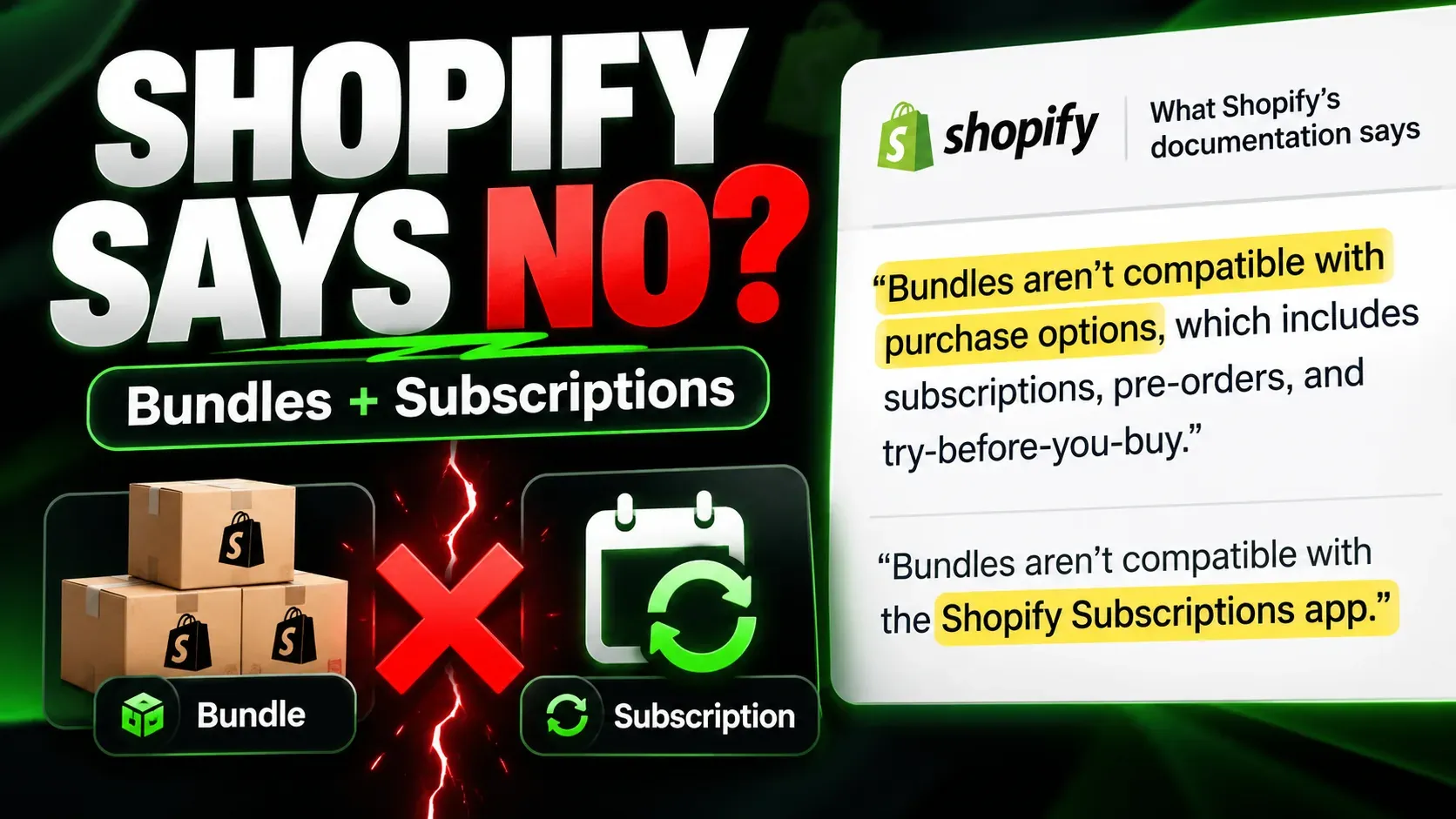
| Shopify Subscriptions | Free | None | None: Shopify says bundles aren’t compatible with the app | Recharge’s help centre says its support team can switch on a migration tool (Migr8) for this move |
| Skio (owned by Recharge) | Scale $599, or $499 a month billed annually; Enterprise quoted | 1.25% + 20¢ on orders involving a subscription | Build-a-box, including preset boxes, on Scale | Not stated on the pages read |
| Smartrr (owned by Relay Commerce) | Launch $99; Grow $299; Excel from $499 | 1% of subscriber GMV | Build-a-box on Excel | Not stated on the pages read |
| Stay AI | Standard $299 a month on an annual contract, or $499 with none; High Growth quoted | 1% + 19¢ | “Bundles & Boxes”, listed on Standard | No implementation charge for migrating, per its pricing FAQ (15 Nov) |
| Supr | Free up to $1,000 a month of subscription and bundle revenue; then $19 to $399 by revenue band | None | Calendar-planned boxes and build-your-own boxes on every plan | “Import from other apps”, on every plan (15 Nov) |
Sources for the table: Recharge pricing and Recharge billing and pricing, Appstle, Bold and its Easy Bundles article, Curobi’s pricing, Joy, Kaching and its build-a-box changelog, Loop, Seal and its Recharge switching article, Bundler, Shopify Help Center, Skio, Smartrr, Stay AI and Supr.
Two of the twelve belong to larger groups: Recharge owns Skio, and Smartrr has been owned by Relay Commerce since February 2025 (press release). Check who owns any app on the day you choose. Recharge alternatives not compared here, among them Subi, Recurpay, Awtomic, Easy Subscriptions and Ordergroove, are priced in the best Shopify subscription apps and Shopify subscription box apps by box type.
What changed at Recharge in November 2026, and who it affects
Recharge changed its plans for new stores on 2 November 2026. Its help-centre article Recharge billing and pricing, edited that day and unchanged when re-read on 15 November 2026, bills a store that installs on or after 2 November $149 a month plus 1.50% and 20¢ per transaction on Starter, after a 60-day free trial. On 25 October 2026 Recharge’s pricing page listed Starter at $99 a month plus 1.49% + 19¢. The $25-a-month 25-50 plan is closed to new stores, and Scale, at $499 a month plus 1.25% + 20¢, has replaced Plus for new merchants. The fee is calculated on the total processed amount, including shipping, taxes and refunded orders, and it applies to one-time orders too.
Who the new price reaches depends on when the store installed:
- A store installing Recharge now pays $149 + 1.50% + 20¢ on Starter once the trial ends.
- A store on the closed 25-50 plan stays on it until it passes 50 cumulative lifetime customers, then moves to Starter. Recharge’s article doesn’t say at which Starter rate.
- A store already on Starter may be on older rates. Recharge says a store’s rates depend on its plan and when it installed, and has not published whether or when existing Starter stores move to the new rate.
- A store on Plus keeps its terms and rates until it signs a new contract.
So the first step for an existing Recharge store is the Billing page in its Recharge merchant portal, not this page. If your rates haven’t changed, the comparison below still holds, but the saving from leaving is smaller; the next section prices both.
The research behind this page found no merchant review or forum post reacting to the 2 November change, in the 13 Recharge App Store reviews and nearly 1,300 r/shopify and r/ecommerce posts read between August and mid-November 2026. Install counts move more slowly than prices: StoreLeads, a third-party tracker, counted Recharge on 50,260 Shopify stores on 6 November 2026, 14.4% fewer than a year earlier and 0.5% more than a quarter earlier. That is one provider’s count, not a census, and almost all of the year it covers came before the new price. What changed this month is the price a new store pays, and that is what the alternatives below are measured against.
What does each alternative cost if you’re leaving over price?
The table is an illustrative model, not a quote. Assumptions: a $40 average order; one active subscription per monthly order, so $5,000, $15,000 and $50,000 of monthly subscription revenue mean 125, 375 and 1,250 subscribers; list prices on monthly billing read on 13 to 15 November 2026; each percentage applied to subscription revenue only; trials, promotions, yearly discounts, add-ons and negotiated rates ignored. It is the same model as Skio alternatives and how to migrate, so the figures can be checked across the two pages. Curobi’s row uses Business ($29.99), the plan that carries its import, because a store moving off Recharge needs a way in; Starter ($9.99, up to 250 subscribers) and Growth ($19.99) don’t include it.

Plain subscribe-and-save subscriptions, monthly bill:
| App and plan | $5,000 (125 subscribers) | $15,000 (375) | $50,000 (1,250) |
|---|---|---|---|
| Recharge Starter, stores installing from 2 Nov 2026 (baseline) | $249.00 | $449.00 | $1,149.00 |
| Appstle | $10.00 | $30.00 | $100.00 |
| Bold, cheapest of its plans | $99.99 | $199.99 | $524.99 |
| Curobi Business | $29.99 | $29.99 | $29.99 |
| Joy, cheapest of its plans | $86.50 | $161.50 | $424.00 |
| Kaching | $24.99 | $49.99 | $79.99 |
| Loop Starter | $149.00 | $249.00 | $599.00 |
| Seal | $9.95 | $24.95 | $89.95 |
| Shopify Subscriptions | $0 | $0 | $0 |
| Skio Scale, monthly billing | $686.50 | $861.50 | $1,474.00 |
| Skio Scale, annual billing | $586.50 | $761.50 | $1,374.00 |
| Smartrr Launch | $149.00 | $249.00 | $599.00 |
| Stay AI Standard, annual contract | $372.75 | $520.25 | $1,036.50 |
| Supr | $29.00 | $49.00 | $99.00 |
Four things hold on this model:
- Every flat-fee app costs less than Recharge Starter at all three sizes, by more than $200 a month at $5,000 and more than $1,000 at $50,000. So does Shopify’s free app, if its features are enough.
- The percentage-fee apps split. Bold, Joy, Loop and Smartrr Launch cost less than Recharge Starter at every size; Stay AI costs more at $5,000 and $15,000; Skio costs more at all three.
- The cheapest paid plan changes with size. At $5,000 it is Seal ($9.95) and Appstle ($10); at $15,000 Seal ($24.95), then Curobi Business and Appstle ($29.99 and $30); at $50,000 Curobi Business ($29.99), then Kaching ($79.99) and Seal ($89.95).
- Curobi is not the cheapest at the small end. At $5,000 Seal, Appstle and Kaching cost less than Curobi Business and Supr costs about the same; at $15,000 Seal costs less. A store that doesn’t need Curobi’s import would pay $9.99 or $19.99 instead.
If you installed Recharge before 2 November 2026, your own rates may be lower than the baseline row. At the Starter rate Recharge’s pricing page listed on 25 October 2026 ($99 + 1.49% + 19¢), the same three stores would pay $197.25, $393.75 and $1,081.50 a month. Every flat-fee app in the table still costs less at those rates, but by less: against Seal, for example, the yearly saving at $5,000 a month is about $2,250 at the old rate, against about $2,870 at the new one. That difference matters when you weigh the saving against the work of moving.
The model understates Recharge, whose fee also applies to shipping, taxes, refunded orders and one-time orders, and understates Bold and Smartrr for subscription orders that carry one-time items. Loop’s loyalty-order fee is left out. Appstle, Kaching and Supr price by revenue while Seal and Curobi count subscriptions, so a different order value moves the crossovers. How to run these numbers for your own store is in flat fee vs percentage of revenue.
Which alternatives sell bundles and boxes without Recharge’s $499 plan?
On Recharge, preset bundles, customizable bundles and the other bundle features are all on Scale, at $499 a month plus 1.25% + 20¢, and Starter has none of them. Product journeys, which move each subscriber through a sequence of products, are on every plan. A Starter store that wants customers to build their own box is choosing between $350 a month more in base fee, with a lower percentage, and another app.
Box program, monthly bill on the cheapest plan that carries a box:
| App and plan | $5,000 (125 subscribers) | $15,000 (375) | $50,000 (1,250) |
|---|---|---|---|
| Recharge Scale (baseline) | $586.50 | $761.50 | $1,374.00 |
| Appstle (Business, then Business Premium) | $30.00 | $30.00 | $100.00 |
| Curobi Pro | $69.99 | $69.99 | $69.99 |
| Joy, cheapest of its plans | $86.50 | $161.50 | $424.00 |
| Loop Starter | $149.00 | $249.00 | $599.00 |
| Seal with Bundler Premium | $19.94 | $34.94 | $99.94 |
| Skio Scale, monthly billing | $686.50 | $861.50 | $1,474.00 |
| Skio Scale, annual billing | $586.50 | $761.50 | $1,374.00 |
| Smartrr Excel | $549.00 | $649.00 | $999.00 |
| Stay AI Standard, annual contract | $372.75 | $520.25 | $1,036.50 |
| Supr | $29.00 | $49.00 | $99.00 |
Same assumptions as the table above. Left out: Bold, whose build-a-box needs the separate Easy Bundles app, whose price is not in this model; Kaching, whose builder adds items as one-time purchases rather than a subscription; and Shopify Subscriptions, which has no box.
Read across and three things hold. Up to $15,000 a month, Seal with Bundler, Supr and Appstle cost less than Curobi Pro, at $19.94 to $49 against $69.99. At $50,000, Curobi Pro is the cheapest box plan in the table, with Supr ($99), Seal with Bundler ($99.94) and Appstle ($100) next. Every alternative costs less than Recharge Scale at every size except Skio, which costs the same on annual billing and $100 more on monthly billing; among the percentage-fee apps, Joy and then Loop are the cheapest routes to a box. Order value moves the Curobi crossovers: at a $25 order, Curobi Pro becomes cheaper than Appstle’s box plan at 600 orders a month rather than 375.
Price is only half of it, because “box” means four different things. Among the twelve, a box of the month planned on a calendar, where everyone billed in March gets the March box, is documented by Curobi on Pro and Supr on every plan. Contents that rotate through a sequence for each subscriber are documented by Appstle (on its $100 plan), Kaching, Loop (on Pro), Recharge (on every plan), Seal and Supr. A preset box at a fixed price is on Curobi Pro, Joy Starter, Loop Starter, Recharge Scale, Skio and Supr. A box the customer builds is on most of the paid apps above. Which app documents which kind, plan by plan and with what each does not do, is set out in Shopify subscription box apps compared by box type.
What if you were planning to move to Skio?
Recharge acquired Skio; both companies announced it on 30 April 2026. Skio is still sold, as “Skio, a Recharge Company” on the App Store, and still updated: its changelog lists 18 dated entries between 20 August and 12 November 2026. Neither company has announced a sunset or a forced migration. Between late October and mid-November 2026 Skio’s fee rose from 1% + 20¢ to 1.25% + 20¢ on orders involving a subscription, with its base unchanged at $599 a month or $499 billed annually (Skio pricing, checked 14 November 2026; archived copy, 26 October 2026). Skio’s annual price, $499 a month plus 1.25% + 20¢, now matches Recharge Scale’s published rates, though Recharge charges its fee on more of each order (shipping, taxes, refunds and one-time orders included). Our reading, which neither company states, is that Recharge has priced the two products it owns into line.
For a Recharge store, that changes what a move to Skio buys. It is a different product from the same owner. In the model above, Skio costs more than Recharge Starter at every size and the same as Scale on annual billing. What it adds is one plan that includes build-a-box, a multi-step cancel flow, payment recovery and SMS, so a store that would otherwise buy Scale for those features is comparing two Recharge-owned products, not leaving Recharge. If the point was to buy from a company other than Recharge, every other app in the table qualifies on that one test, with Smartrr’s ownership by Relay Commerce worth knowing too.
What the acquisition means for existing Skio merchants is covered in Skio is now part of Recharge, the two products are compared in Skio vs Recharge, and a store already on Skio has its own guide in Skio alternatives and how to migrate.
Which alternatives fit a portal or retention reason?
Recharge’s Starter plan already lists a no-code customer portal, Smart Cancellation Prevention, failed payment recovery, win-back and automated workflows; subscriber journey A/B testing and Concierge SMS, billed per message, are on Scale (Recharge pricing, read 13 November 2026). So a Starter store leaving “for retention” should name the tool it lacks, then check which plan carries it elsewhere.
The table lists what each vendor’s pricing page, listing or help centre names, and on which plan. A label on a pricing page is not a test: install the trial or free plan, then cancel, skip and update a card as a customer before you move anyone.
| App | Cancellation flow or save offers | Failed-payment retries and recovery | A/B testing and SMS |
|---|---|---|---|
| Recharge (baseline) | Smart Cancellation Prevention, Starter | Failed payment recovery, Starter | Subscriber journey A/B testing and Concierge SMS, Scale |
| Appstle | “Retention Tools & Cancellation Control”, Business ($30) | “Payment Retry”, Free | SMS notifications, Starter ($10); no A/B testing listed |
| Curobi | A cancellation reason survey on every plan; save offers from Starter ($9.99) | Retries on days 2, 4 and 7 with an update-card email and auto-pause, from Starter; a recovery dashboard and Churn Insights from Growth ($19.99) | Neither is built in |
| Loop | “Personalized cancellation flows”, Starter | “Smart dunning management”, Starter; backup payment method and hard-decline handling, Pro | Cancellation flow A/B testing, Pro ($399) |
| Seal | “Cancellation flow”, Legend ($24.95, up to 500 subscriptions) | Dunning settings (the plan was not clear on the page as read) | None listed |
| Shopify Subscriptions | No cancellation flow | Retry count, days between retries and a final action are configurable | None |
| Skio | Multi-step cancel flow, Scale | Payment recovery, Scale | SkioSMS, one-way and two-way, Scale |
| Stay AI | Churn surveys and win-back campaigns, Standard | “Smart Dunning”, Standard | A/B testing and an email and SMS chatbot, Standard |
| Supr | Cancellation flows, offers per reason and targeted retention offers, every plan | Payment retries, card-update emails and a final retry action, every plan | None listed |
Bold, Joy, Kaching and Smartrr were not compared on this point. Sources: the pricing pages and listings cited under the first table, read on 15 November 2026 for Appstle, Loop, Seal, Stay AI and Supr and on 14 November for Skio; Shopify’s free app from its Help Center pages on app settings and analytics; Curobi’s from its own product documentation.
The portal itself is the part a pricing page describes least well. Recharge runs its own customer portal. Appstle lists a “Shopify Native Customer Portal” on its Free plan, Loop a “Branded customer portal” on Starter, and Supr lists skip, pause, cancel and payment updates on every plan. Curobi’s portal sits on the store’s Shopify customer account page: skip, pause, cancel, address and card changes on every plan, and quantity, product swaps and rescheduling from Starter. If your subscribers already know where to manage their subscription, plan how you will tell them it has moved, because Recharge won’t.
Which alternatives fit enterprise needs?
Recharge’s Custom plan is a contract through its sales team. Recharge lists custom implementations, dedicated priority technical support, a review of your solution architecture and enterprise business reviews for it, and says Shopify Plus stores may be eligible for discounted pricing; its billing article gives Custom a four-hour first response and video callback support, against eight hours under the support plan included with every plan. At that level the list prices on this page matter less than the contract, because every vendor’s enterprise rate is quoted.
The alternatives sold on quoted terms are Loop’s Enterprise plan (“Let’s talk”, with the fee negotiable and a risk-free test environment and post-migration support listed), Skio’s Enterprise plan, Stay AI’s High Growth plan and Appstle, whose top plan card says “Ping us for enterprise, APIs & webhook”. Smartrr publishes its Excel plan from $499 a month plus 1% of subscriber GMV. Ordergroove, which is not among the twelve here, publishes only a minimum of $2,917 a month on its App Store listing.
Five questions separate enterprise offers more than their feature lists do:
- What is the term, and what does leaving early cost? Recharge’s Custom terms are set in the sales process; its billing article describes Starter as month-to-month and gives no term for Scale.
- Does the published percentage fall with volume? Recharge says Scale’s rates scale with volume but does not publish the steps; ask every vendor for the rate at your volume in writing.
- Who runs the migration, and is there a test environment? Loop lists both on Enterprise; Stay AI says it charges nothing to implement.
- What can your developers reach? Ask for API scope, rate limits and webhooks before you sign.
- How do you get your data out? The exports you will need to leave again are worth checking before you arrive.
Curobi sells five self-serve plans and no enterprise contract. Its developer API is on every plan, with a limit of 60 requests a minute per store and bursts to 120, and outbound webhooks are on Business and Pro.
When is staying on Recharge the better answer?
- You use what Scale bundles. Customizable bundles, tiered discounts, subscriber journey A/B testing and Concierge SMS on one bill are not free to rebuild. Price each alternative with those features at the plan you would actually buy, not without them.
- Your rates did not change. If your Billing page still shows an older Starter rate, the saving from leaving is smaller than the baseline rows suggest.
- You are partway through a contract. Plus and Custom are contracts; time a move to the end of the term.
- It is your busy season. A first renewal on a new app that lands between Black Friday and Christmas is the worst time to discover a mis-imported date.
- The saving is small next to the risk. One reply in an r/ecommerce thread on store migrations (November 2026) put it bluntly: “if the main driver is saving a couple hundred bucks a month, the migration usually loses money”. Work out the yearly difference at your own volume before you decide.
What moves when you leave Recharge, and what doesn’t?
Three facts from Recharge’s and Shopify’s own documentation decide how a move off Recharge goes.

Your Recharge checkout decides where the cards are. Recharge runs Shopify stores on one of three checkout types, and each holds existing subscribers’ payment methods in a different place (Recharge, Shopify Checkout Integration technical details, updated 22 July 2026):
| Recharge checkout type | Where existing subscribers’ payment methods are | What to ask the new app |
|---|---|---|
| Shopify Checkout Integration | Shopify’s vault. Subscribers carried over from Recharge’s older checkout are billed by Shopify through the legacy gateway (Stripe, Braintree or Authorize.net) added in the Shopify admin | Whether it attaches vaulted cards to the contracts it creates, and how it handles the legacy-gateway group |
| Migrated Shopify Checkout Integration | New sign-ups are in Shopify’s vault; subscribers from before the conversion are still billed by Recharge through the gateway set up in Recharge until they update their card | How it handles each of the two groups |
| Recharge Checkout on Shopify | The gateway connected to Recharge | What it needs from that gateway; Recharge itself requires this checkout to be converted before it can take new checkout orders |
Shopify’s migration guide has the receiving app create a new contract for each subscriber and says: “You can use an existing payment method that’s been vaulted in Shopify for use with subscriptions or a card-on-file” (Shopify, Migrate subscription contracts). Cards held by an outside gateway follow separate steps that Shopify documents for Stripe, Braintree, Authorize.net and PayPal Express (Shopify, Migrate customer information). Recharge’s documentation adds two limits: payment tokens cannot be moved into Shopify Payments, and moving card numbers from a legacy processor into Shopify Payments, a “PAN migration”, requires Shopify Plus (Recharge, PAN migrations, updated 16 July 2026). When Recharge moves stores between its own checkout types, it lists Stripe Link, Amazon Pay, Klarna and Afterpay, iDEAL and SEPA as payment methods that usually need the customer to enter their details again (Recharge, Updating payment methods for unsupported gateways, updated 12 August 2026). Ask any new app the same question about those methods.
Recharge bills until you cancel the account, then stops for everyone. Recharge’s guide to leaving says: “Until you formally cancel, Recharge continues processing existing subscription orders,” and “It is important to cancel your account before subscriptions become enabled on the new provider to avoid double-billing your customers.” Once you cancel, “subscription processing is immediately stopped” and the standard subscription widget is disabled (Recharge, Migrating away from Recharge, updated 4 June 2026). Shopify gives the same advice from the other side: “We strongly recommend that you pause any billing in your current application while migrating customer payment methods and contracts” (Shopify, Migrate customer information).
Recharge doesn’t tell your subscribers, and uninstalling starts a clock. The same Recharge article says: “Recharge does not have a built-in notification to alert customers that subscriptions will be ending,” and customers already in a flow such as win-back keep receiving its emails after you cancel unless you remove them. On the Shopify Checkout Integration, each subscription is a subscription contract owned by Recharge, and Shopify’s documentation says: “48 hours after a user uninstalls a subscription app, any subscription contracts that are owned by that app and that haven’t been terminated are cancelled” (Shopify, About subscription contracts).
| Part of the subscription | What happens on a move |
|---|---|
| Subscriber’s card | Stays where your checkout type keeps it; see the table above |
| Subscription contract | Does not transfer. The new app creates a new contract; Recharge’s billing has to stop |
| Plans, discounts and box rules | Recreated in the new app before any import |
| Cadence and next charge date | In the Subscriptions - All and Charges - Queued exports Recharge recommends; check every date before import |
| Past subscription orders | Stay in your Shopify store |
| Customer portal, widget, win-back and other Recharge flows, loyalty, SMS | Rebuilt in the new app or in your email and SMS tools |
Merchants who describe their own moves are anxious about exactly these mechanics. In an App Store review dated 10 November 2026, a store owner with 90% of the business’s income in recurring subscriptions wrote, “I was anxious moving from Recharge to Appstle”, and credited the vendor’s staff with guiding the move (App Store review). That is one account, not a measurement, but it is why the “help moving off Recharge” column in the first table is worth reading before the price column.
How do you move subscriptions off Recharge, step by step?
These steps are the Recharge-specific part, built on Recharge’s own checklist. The full procedure for any app, with checks at each stage, is in how to migrate Shopify subscription apps without losing subscribers.
- Check which Recharge checkout your store uses. Recharge’s documentation describes three: the Shopify Checkout Integration, the Migrated Shopify Checkout Integration and the Recharge Checkout on Shopify. The type decides where each subscriber’s card is and what the new app will need from you.
- Pick a quiet date and check your terms. Choose a week outside your busiest season, so the first renewals on the new app fall when you have time to check them. If you are on a Custom or Plus contract, find out when its term ends.
- Set up the new app first. Recreate your plans, discounts and any box rules in the new app before importing anyone, and ask it how it handles your Recharge checkout type and payment gateway.
- Stop new Recharge sign-ups and date changes. Following Recharge’s own checklist, unpublish the subscription widget and turn off Reschedule upcoming regular orders in the customer portal settings; Recharge also suggests turning off the other portal settings during the move. Customers already in a flow such as win-back keep getting its emails until you remove them.
- Download Recharge’s exports. Recharge recommends Subscriptions - All, Charges - Queued, Customer - Payment Tokens (for the Migrated Shopify Checkout Integration), Payment Methods - All, Customer, and the two prepaid order exports if you sell prepaid. Check the number of subscriptions in the files against the number in Recharge before you import.
- Import, then stop Recharge before the first new charge. Import each subscriber with the next charge date they had in Recharge. Recharge keeps billing until you cancel your account and stops for every subscriber the moment you do, so cancel it before the first charge on the new app. To move in batches instead, cancel each moved subscription in Recharge before its next charge, after checking whether that sends the subscriber an email.
- Tell your subscribers. Recharge does not notify customers when you cancel, so send your own message saying where they now manage their subscription, and point the account menu or portal link at the new app.
- Check the first renewal, then uninstall Recharge. Confirm each subscriber was charged once, for the right amount, on the right card. Uninstall the Recharge app only after everyone has renewed on the new app: Shopify cancels any subscription contract an uninstalled app still owns 48 hours after the uninstall.
The export names and the order of the Recharge steps follow Migrating away from Recharge (updated 4 June 2026, read 15 November 2026). If the new app is Shopify’s own Subscriptions app, Recharge’s article says its support team can switch on a migration tool built with Migr8 for that move.
What Curobi’s Recharge import covers
Curobi documents a self-serve CSV import, and Recharge is a named source on its Recharge migration page. The import is included on the Business plan ($29.99 every 30 days) and on Pro ($69.99, the plan for curated and build-a-box programs); Starter and Growth don’t include it, whereas Appstle and Joy list migration help on their free plans and Supr on every plan. For a Recharge store on the Shopify Checkout Integration, the import finds each customer by email or Shopify customer ID and uses the first usable card among that customer’s first ten cards saved in Shopify, which is worth checking for customers with more than one. Subscribers billed through Stripe, Braintree or Authorize.Net need an email to hello@curobi.com before you start, and the old gateway connected to the Shopify store. Each run takes up to 100 rows, so a larger book is split into several files; every next billing date must be after today (UTC), so the import charges no one straight away; and the price column is the price of one unit. The import does not pause or cancel anything in Recharge: stopping Recharge’s billing is your step, as set out above. Curobi is also a new app, on the Shopify App Store since 10 August 2026 with one review as of 13 November 2026. Where the two apps differ plan by plan is set out in Curobi vs Recharge.
Frequently asked questions
What is the cheapest alternative to Recharge?
Shopify’s own Subscriptions app is free. Among paid apps, on list prices read on 13 November 2026 and a $40 average order, Seal ($9.95) and Appstle ($10) cost the least at $5,000 a month of subscription revenue, Seal ($24.95) at $15,000, and Curobi Business ($29.99) at $50,000, against $249, $449 and $1,149 for Recharge Starter at the rates for stores installing from 2 November 2026. For a box program up to $15,000 a month, Seal with the Bundler app, Supr and Appstle cost the least; at $50,000, Curobi Pro ($69.99) does.
Which Recharge alternatives sell a build-a-box without a $499 plan?
On Recharge every bundle type needs Scale, at $499 a month plus 1.25% + 20¢. In the plan pages read on 13 November 2026, Appstle puts build-a-box on its $30 plan, Supr on every plan from free, Joy on its $49 Starter plan (plus 0.75%), Loop on its $99 Starter plan (plus 1.0%) and Curobi on its $69.99 Pro plan, and Seal sells one through the separate Bundler app at $9.99 a month on top of a Seal plan. Skio and Smartrr carry build-a-box on plans from $499 a month; Shopify Subscriptions has none.
Does Recharge’s November 2026 price apply to stores already on Recharge?
Recharge’s help centre says stores that install on or after 2 November 2026 pay $149 a month plus 1.50% + 20¢ on Starter, and that a store’s rates depend on its plan and when it installed. It has not published whether or when stores already on Starter move to the new rate. A store on the closed 25-50 plan stays on it until it passes 50 cumulative lifetime customers and then moves to Starter, and Plus merchants keep their terms until they sign a new contract. The Billing page in your Recharge merchant portal shows the rates you are on.
Is Skio still an alternative to Recharge?
Skio is still sold and updated, but Recharge has owned it since the acquisition announced on 30 April 2026, so moving from Recharge to Skio changes the product, not the owner. Skio’s Scale plan costs $599 a month, or $499 a month billed annually, plus 1.25% + 20¢ on orders involving a subscription, which on annual billing matches Recharge Scale’s published rates. Neither company has announced a sunset or a forced migration.
Will subscribers have to re-enter their cards if I leave Recharge?
It depends on your Recharge checkout. On the Shopify Checkout Integration, cards sit in Shopify’s vault, and Shopify’s migration guide says a contract created by a new app can use a payment method already vaulted in Shopify, so those subscribers need not re-enter them if the new app supports it. Subscribers billed through Stripe, Braintree or Authorize.net, including those Recharge still bills through its own gateway on the Migrated Shopify Checkout Integration, follow a separate path. Ask the new app about each group before you set a date.
What happens to my subscriptions when I cancel Recharge?
Recharge stops processing them immediately. Its help centre says that until you formally cancel, Recharge keeps processing existing subscription orders, that cancelling stops all processing and disables the standard widget, and that Recharge has no built-in notification telling customers their subscriptions are ending. Cancel before the first charge on your new app to avoid double billing, tell subscribers yourself, and uninstall the app only after everyone has renewed on the new one, because Shopify cancels contracts an uninstalled app still owns 48 hours later.
Sources
- Recharge: pricing page (read 13 November 2026) and help-centre articles Recharge billing and pricing (edited 2 November 2026, re-read 15 November), Migrating away from Recharge (updated 4 June 2026), Understanding Shopify Checkout Integration technical details and requirements (updated 22 July 2026), Updating payment methods for unsupported gateways (updated 12 August 2026) and Migrating legacy payment methods into Shopify Payments using PAN migrations (updated 16 July 2026), all read 15 November 2026. The 25 October 2026 Starter rate is from Recharge’s pricing page as recorded in how much Recharge costs.
- Shopify developer documentation: About subscription contracts, Migrate subscription contracts and Migrate customer information, retrieved 14 November 2026; Shopify Help Center, Shopify Subscriptions considerations, app settings and analytics.
- Skio: pricing page and changelog, checked 14 November 2026; archived pricing page, 26 October 2026.
- Other vendors’ prices, plan gates and migration help: as listed under the first table, read on 13 November 2026, with Appstle, Loop, Seal, Stay AI and Supr re-read on 15 November 2026. Smartrr’s ownership: Relay Commerce press release, February 2025. Ordergroove: App Store listing, read 13 November 2026.
- Install counts: StoreLeads, Recharge Subscriptions, updated 6 November 2026, read 15 November 2026. One provider’s data.
- Merchant accounts: an App Store review of Appstle dated 10 November 2026 and an r/ecommerce thread on store migrations from November 2026. These are individual accounts, not measurements.
- Curobi’s plans, limits and import rules: its pricing page and Recharge migration page, from Curobi’s product documentation as of 13 November 2026.
Prices checked on 13, 14 and 15 November 2026. Recharge, Skio, Loop and Stay AI all changed their published terms between October and mid-November 2026, so re-check before you decide.